
The Secret Agent
The Pettiness of Evil

Recent cinema has had no shortage of ways to depict evil. The two favorites for the Best Picture Oscar — Sinners and One Battle After Another— hinge on its heroes being beset by the slings and arrows of white supremacy in very different ways. Bugonia and Eddington depict men driven to do terrible things by the conspiratorial view that their personal problems are clearly happening because of a shadowy evil cabal. Frankenstein and Marty Supreme deal with protagonists who are so convinced of their own greatness that it blinds them to the horrible things they do in the name of achieving their goals. As I pondered my hypothetical Oscar ballot though, I kept coming back to a film I loved but whose messaging eluded me and haunted me. I knew in my heart instinctively that I loved this film, but if you asked me why, my answer would slip away like I was trying to hold tight to a wet bar of soap. After some recent pondering, I think I can speak to why The Secret Agent held my attention. It spoke to the kind of evil I was seeing now, today, in my own community.
Plot details for The Secret Agent run through this essay, so be forewarned, but I’d also say this is not a film that can meaningfully be “spoiled”.
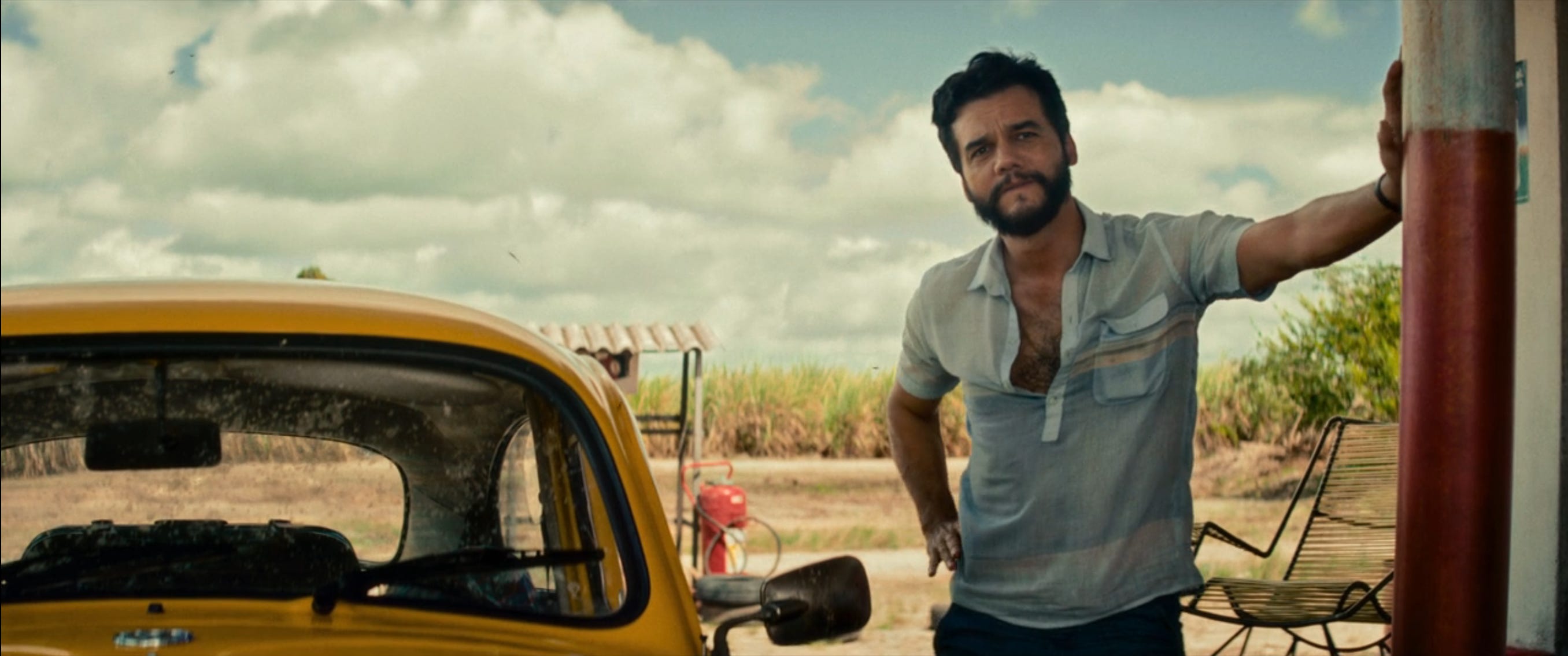
The Secret Agent is the story of Armando (Wagner Moura), a university researcher in northern Brazil in 1977 during the country’s brutal military dictatorship who we meet while he’s on the run from something. He re-settles in his hometown of Recife in a kind of halfway house for people in hiding operated by a charming septuagenarian named Dona Sebastiana (Tânia Maria). As he finds his bearings and ponders his next steps, he tells the story of why he’s running to a woman fighting the dictatorship named Elza (Maria Fernanda Cândido), who gets him to tell his story on the record via a series of tape recordings. As it turns out, in the past a man named Henrique Ghirotti (Luciano Chirolli) from a utility company had come to Armando’s university to shut down his department, and when Armando did not defer to Ghirotti’s demands with perfect deference, Ghirotti had his wife killed and then put out a hit on him. Now he must figure out how to get out of the country before the hit man Augusto (Roney Villela) can find him.
Upon its release, The Secret Agent pulled a kind of interesting bait-and-switch. Between its title and its trailer it billed itself as an espionage thriller. I went into the theater expecting that Armando would spend the course of the film working at the destruction of Brazil’s military dictatorship while undercover. What I found, to my surprise, was a film about academics, corporate executives, family drama, and hitmen. Outside of a few characters who work for the police, no direct state power is depicted, and the resistance to the dictatorship is depicted by people who are seeking long term accountability, not espionage.
In retrospect, a kind of primer to the film appears in its first title card. As Armando pulls into a service station to refuel his VW Bug, the words “Nossa história se passa no Brasil de 1977, uma época cheia de pirraça” appear. The subtitles render this “Our story takes place in Brazil in 1977, a time of great mischief.” That last word, pirraça, speaks volumes. It is pointedly not a time of great malada — evil. While I understand why “mischief” is the word that was put in the subtitle, it doesn’t do justice to the subtleties of its meaning. “Spite” might be better. Pirraça is not the word used to describe a child throwing a firecracker into a toilet for funsies, that word would be travessura. Pirraça is the word used when a child looks you dead in the eye after you say “be sure not to spill your milk” and pours their glass of milk directly on the floor. That’s what The Secret Agent is about: a concentrated and deadly form of pirraça.
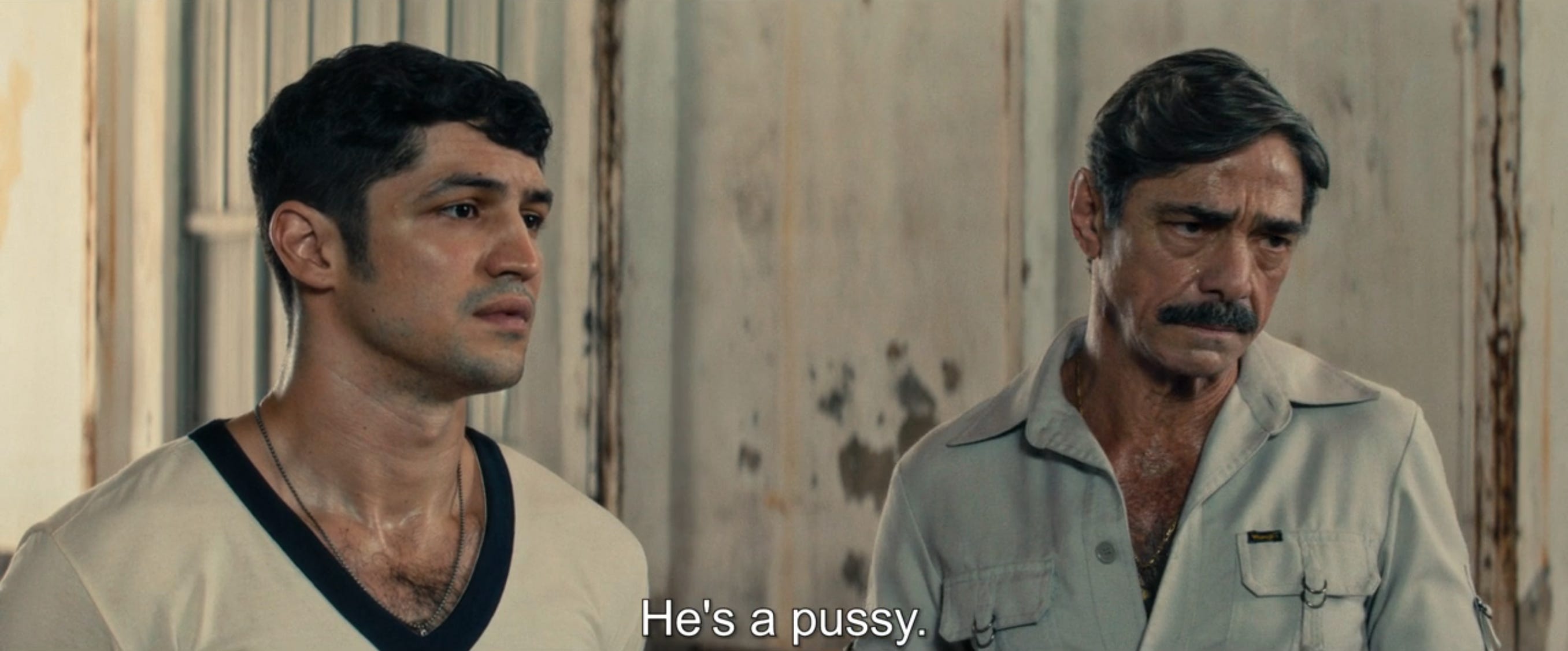
The antagonists of The Secret Agent do not operate like an antagonist in a Nazi movie, cunning and sly and sinister. They act like assholes. They are all deeply incurious men without a gram of introspection in their souls who dislike anyone not exactly like them. The fact that they act like assholes isn’t the problem however. Society will always have assholes. The problem is that they do not feel shame about being assholes. They revel in it, and in the realm of Brazil in 1977, during the época cheia de pirraça, society rewards the assholes rather than scolds them.
Every figure of power in The Secret Agent is a grown man who has decided that “understanding the world around him” and “existing in society with different kinds of people” is for pussies, and you get the sense that these men achieved this power because of their bullheaded piggishness, not in spite of it. Very pointedly, they crave both respect and power, but also see no reason why they should need to earn either.
The police in the film absolutely represent this culture of pirraça. They are not simply bad at their job, they seem to see the whole “maintaining the peace” thing that’s ostensibly the point of their existence as beneath them. In the opening scene a pair of cops ignore a dead body rotting in a parking lot so that they can shake down Armando. The idea that they might help deal with the corpse doesn’t even enter their thinking.
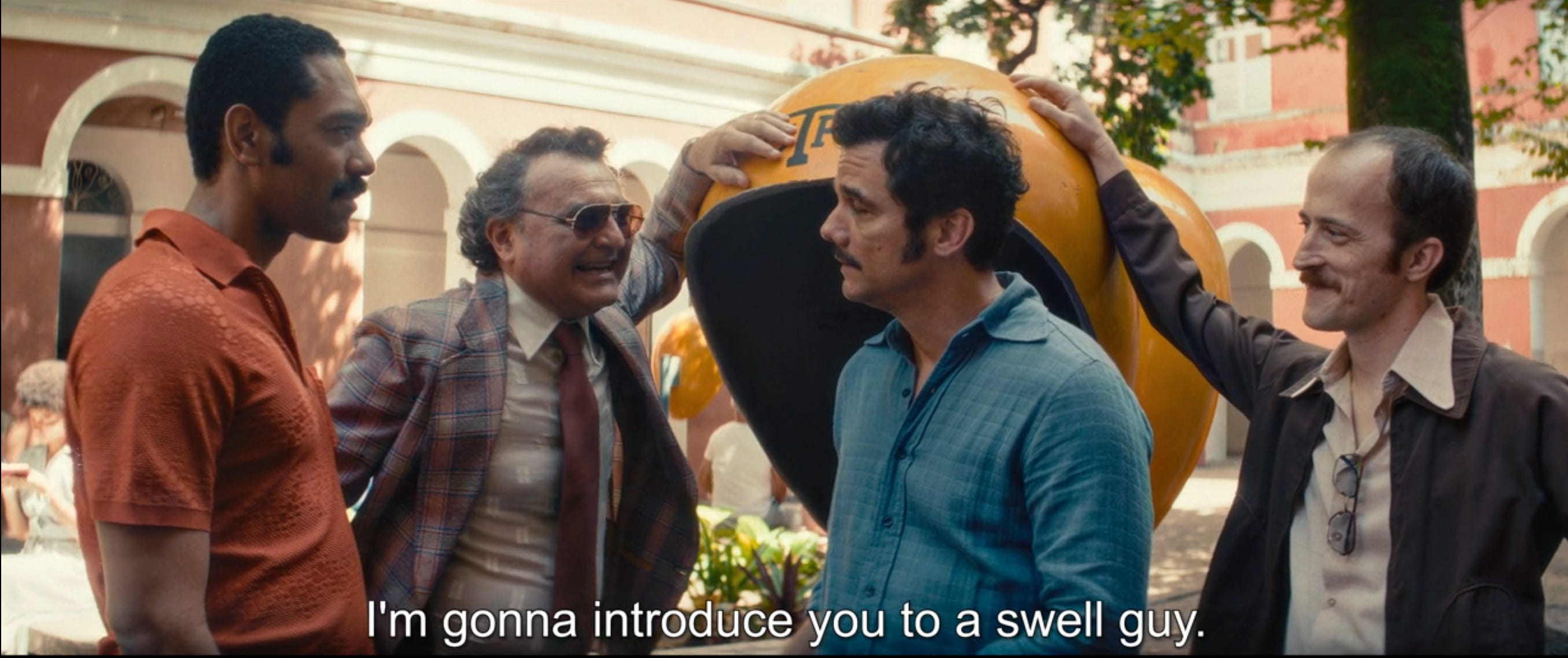
Later on while working in Recife, Armando meets the local chief of police, Euclides, and his horrible large adult sons Sergio and Arlindo. After they’re introduced, Euclides takes a liking to Armando, doubtless thinking of him as a fellow asshole who likes to see his fellow man squirm for his pleasure. Euclides takes Armando across the street to gawk at the war injuries of a German tailor named Hans. You get the sense that Euclides does this with all his new friends. “Check out what I get to do as Police chief! I can get the Kraut to take his shirt off and show me his scars”. Never once has he talked to Hans about how he got those scars of course. If he had, he would realize that Hans is not a soldier of the Wehrmacht, he’s a Jewish Shoah survivor. That, however, would require curiosity about the world around him, and curiosity is for cucks.
Still later Euclides is reading the paper, reporting that in the latest carnival season 91 people have been killed. “It’ll probably be more” he says nonchalantly, not remotely considering that as chief of police it’s his job to keep people from being killed, not to take bets on how many deaths will happen.
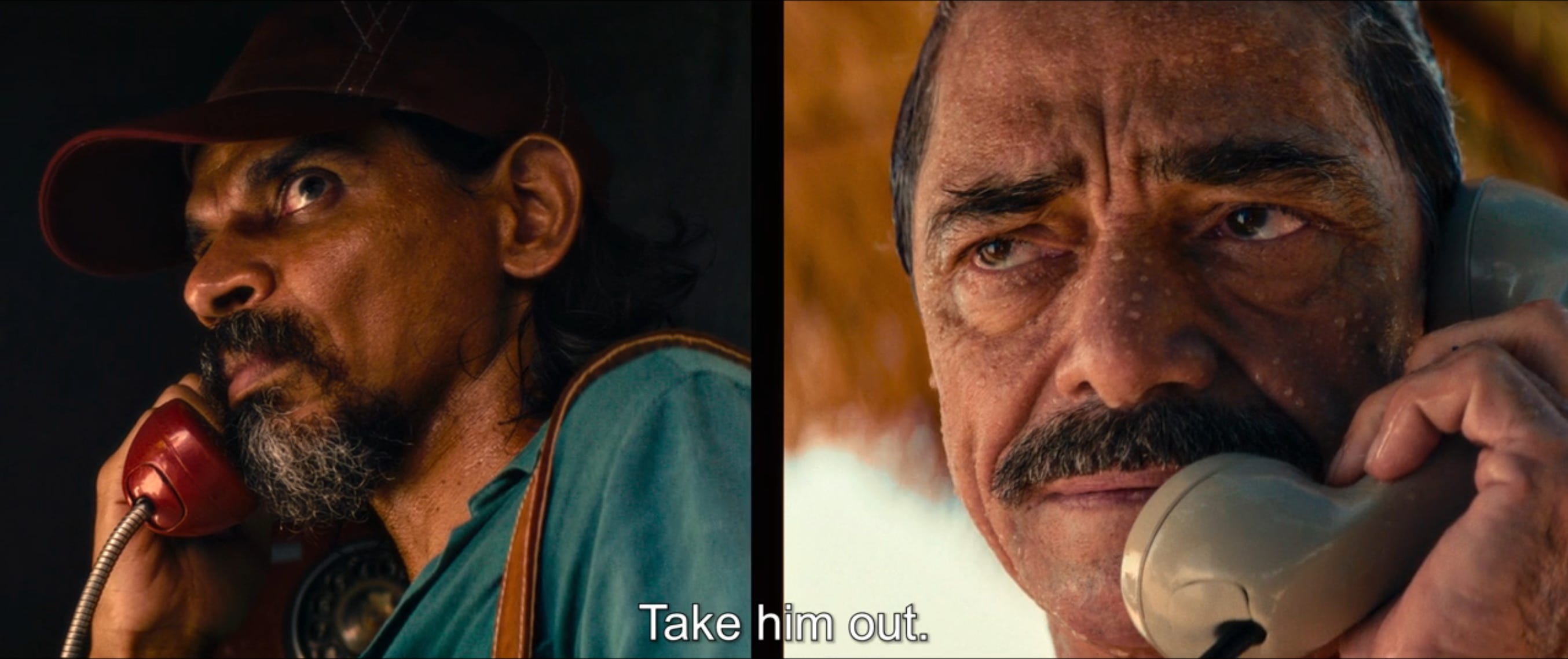
An important point that The Secret Agent makes is that no one is immune from pirraça, not even those who ostensibly hold power. The hitman Augusto and his stepson Bobbi track Armando down via good old fashioned detective work and bribes, but ultimately decide to hand over the actual killing of Armando to a local thug in Recife named Vilmar who they meet at his day job at a sugar packing warehouse. While negotiating for the price, Bobbi tries to talk him down from his ask of 4,000 cruzeiro for the job by insulting his place of employment. “You work in this shithole, carrying sugar like some animal. This is an easy job”. Little does he know that he’s earning the pirraça of a man with a gun at that moment. As Wilmar and Bobbi are both tracking down Armando later in the film, Wilmar shoots his employer Bobbi in the back of the head at point blank range, seemingly out of nowhere. “Like some animal…” he mutters as he walks away.
The greatest figure of boorish pigheadedness in the film is the industrialist Ghirotti. When he arrives at Armando’s university he disrespects literally everyone he meets. He claims that being in the broadly browner and poorer northeast of Brazil makes their research inherently parochial, he brushes Armando off because of the length of his hair, and assumes that Armando’s wife — a fellow professor at the university — is actually a secretary. He confidently asserts that his consortium is miles ahead of Armando’s department in the development of an electric vehicle, and that Armando’s “lithium battery” idea is out of touch. After shitting all over Armando’s work, colleagues, looks, and his wife, they finally talk back and tell him how disrespectful he’s being over dinner. For daring to point out this disrespect, Armando and Fátima get contracts put out on their heads. Ghirotti has decided that he is one of the elect, the important real people who are empowered to make decisions about the lives and work of the little people of the north who are so clearly below him. He need not be polite about it. Politeness and deference is for pathetic weaklings, and he’s a big strong real man. Failing to be polite to him though? That’s gonna cost you your life.
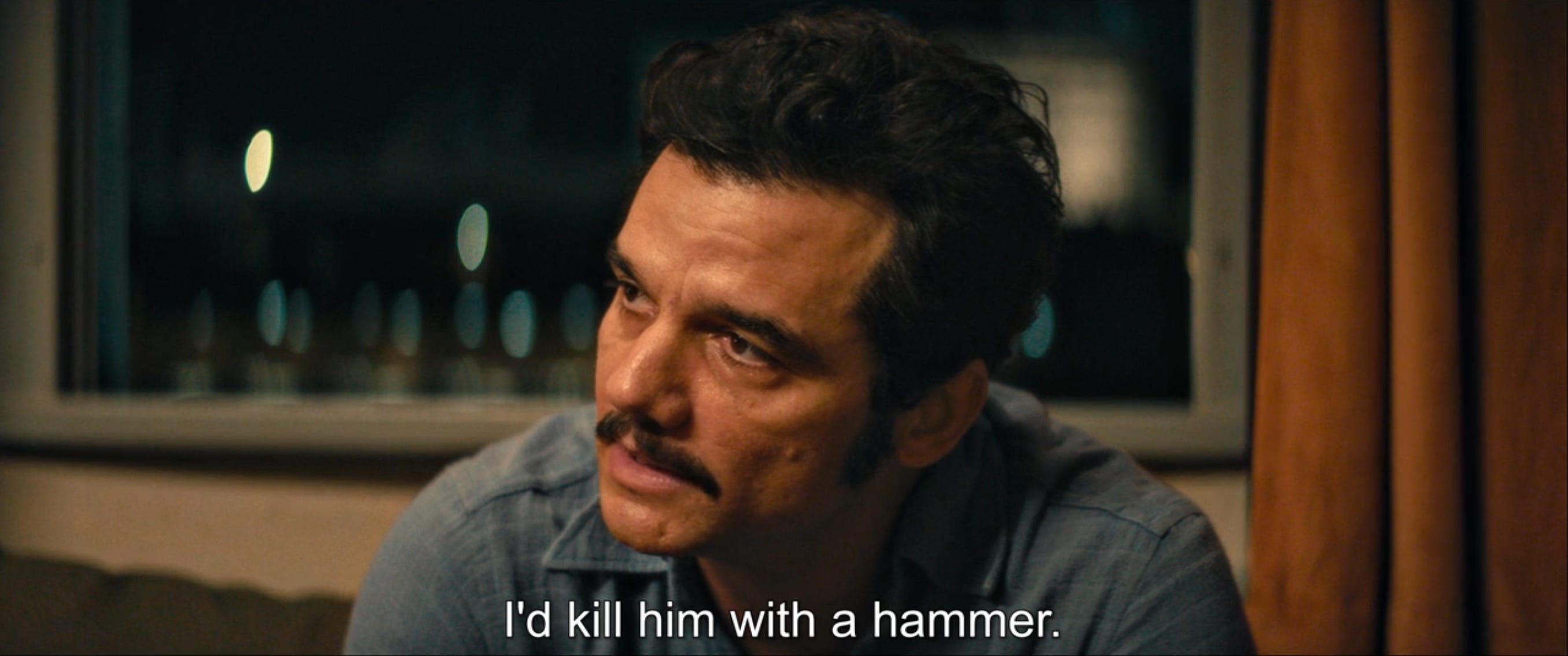
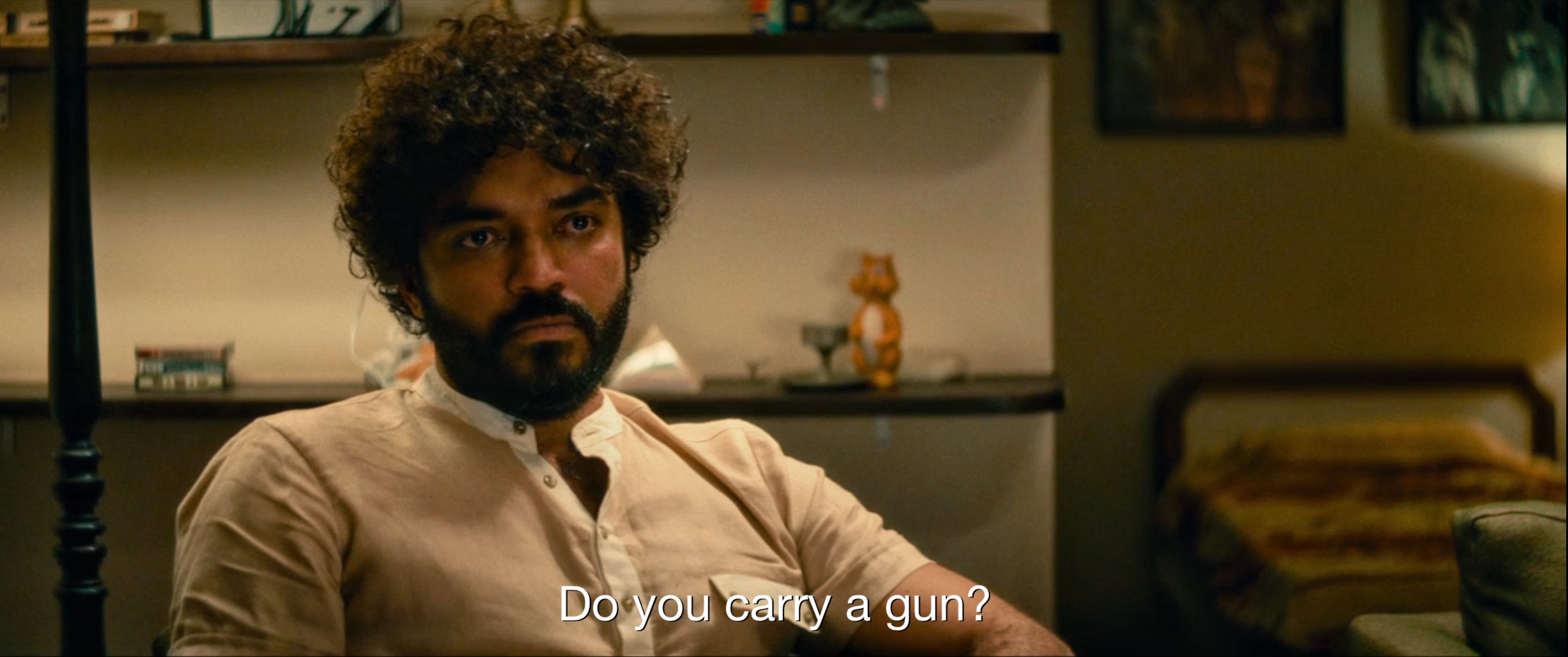
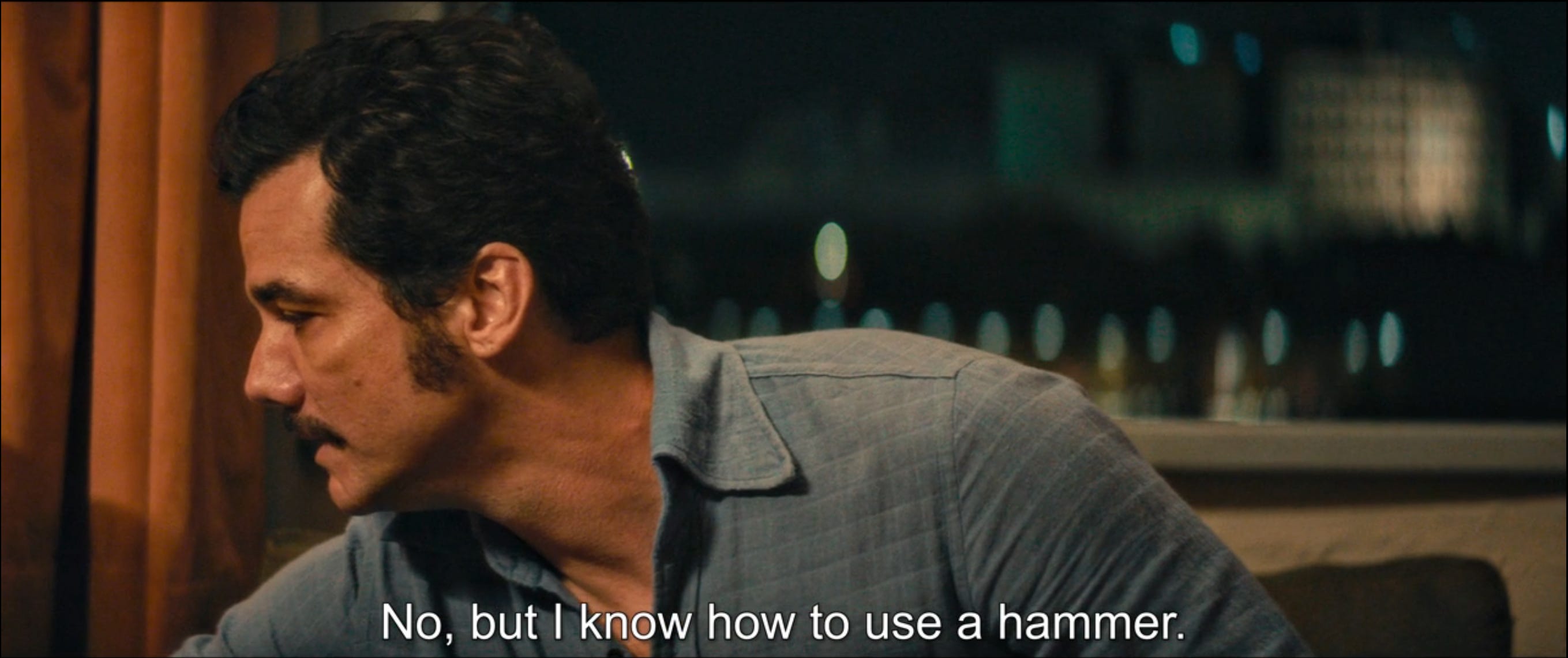
I come from a generation that was raised on the idea that totalitarianism looks like the Nazis in a Steven Spielberg movie. If fascism comes, it will come with sharp outfits and coldly calculating whip smart strategy to expertly execute its evil agenda. This is not what I have witnessed from the MAGA movement, either from afar via coverage of the government at its highest levels or from up close via ICE agents in my neighborhood. Whether it’s JD Vance demanding respect and gratitude when he’s earned neither or ICE agent Jonathan Ross murdering my neighbor in cold blood and announcing “fucking bitch” immediately afterwards, what I keep seeing is not cruel competence, but pirraça. The Secret Agent describes a world in the rear view, which sure, has great pastel shirts, tropicalia music, and beloved movie palaces that all no longer exist as cultural norms, but also thank heavens has left the época cheia de pirraça behind as well. The film quite literally breaks up the action to flash forward to grad students transcribing the tapes that Armando has left behind, and has a haunting epilogue to remind us “this is all in the past”. Unfortunately for me, here and now, what Kleber Mendonça Filho has rendered so beautifully gave me the vocabulary to explain the present. Here’s hoping that our own época cheia de pirraça soon is in the rear view mirror.
I sorely appreciate this post, because I greatly enjoyed The Secret Agent but couldn't quite place *why,* because the sweep and scope of the film kind of flusters any attempt I made to analyze how I felt about it. Very ... true-to-life I suppose.